
Chatbot Use Cases: A Guide by Industry
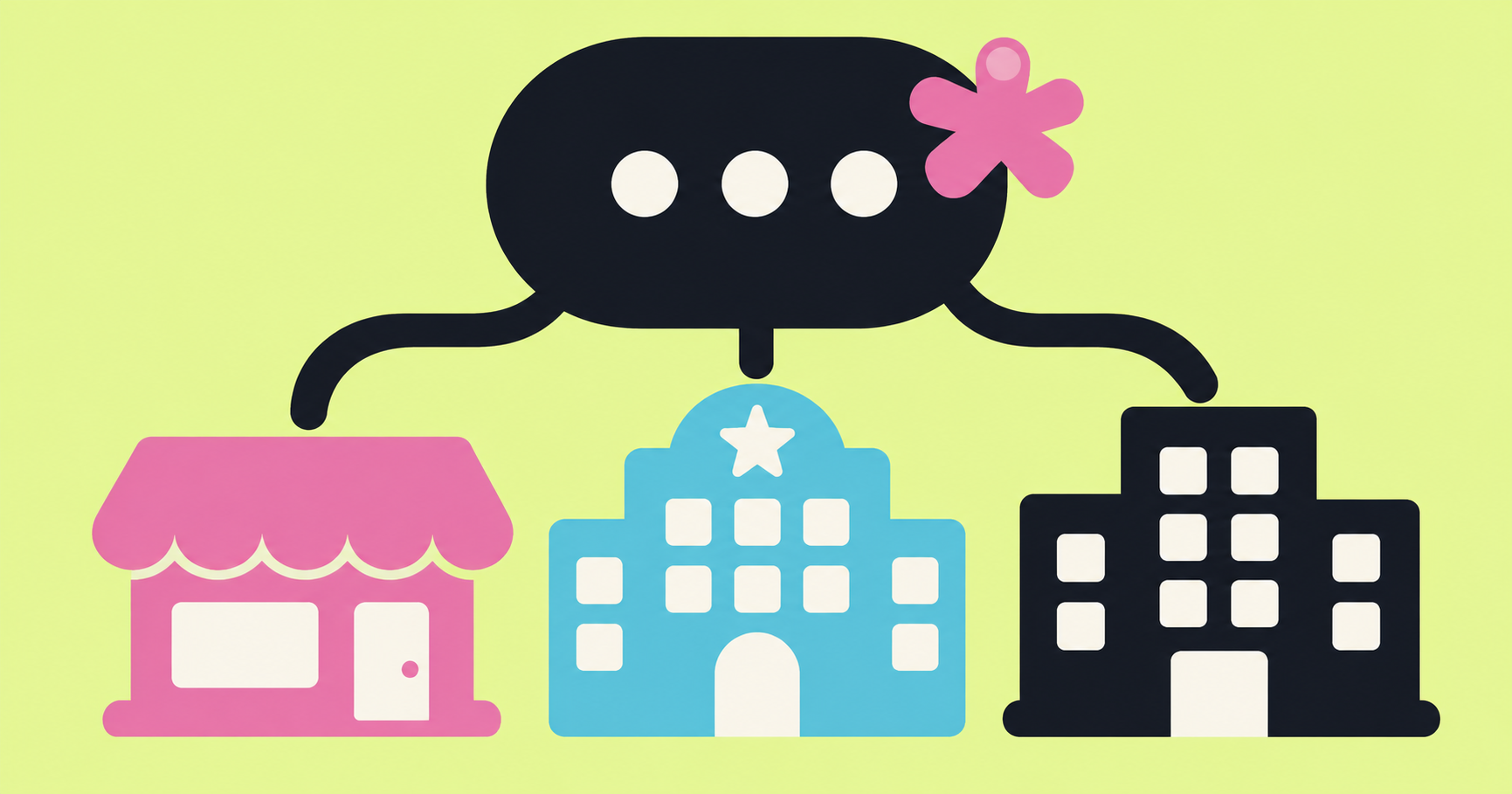


Chatbots can answer order and product questions in e-commerce, handle booking and guest requests in hotels, and support multilingual corporate service teams. Their ability to act depends on connected business systems and defined rules. A useful starting point is one recurring request, with its information source, permitted actions and agent handover designed together.
Is a chatbot only there to answer questions?
A chatbot is rule-based or AI-powered software that responds to written or spoken requests. It can answer from a knowledge base and, when connected, use stock, order or booking records. A customer service project therefore needs to consider the conversation and the operations behind it together.
E-commerce and retail
Product discovery, order tracking, returns and after-sales support are common use cases. When a customer writes on Instagram, the answer can come from the connected store's current records. For systems such as Shopify, iKAS and T-Soft, setup includes deciding which records and actions are accessible.
- Share current order status.
- Assess suitable alternatives to an out-of-stock product.
- Start a return or exchange request under defined rules.
- Answer promotion and delivery questions.
Palmate's shared Manuka example reports a 40% improvement in support efficiency. That measurement belongs to a specific deployment; another store needs to assess results using its own data.
Hospitality and tourism
Communication begins before booking and continues after the stay. Room types, check-in times, directions and extra services can be covered by a knowledge base. Current availability or reservation changes require a connection to the relevant system.
- Booking status and room options.
- Spa, restaurant and other service requests.
- Transport and arrival information.
- Post-stay feedback and request follow-up.
Requests needing an operational decision pass to the right person with context. Receiving a request is not the same as confirming that the service has been approved.
Corporate customer service
Teams serving several countries need consistent company information in different languages. Recurring shipping, billing or service questions can be handled automatically, with specialist cases passed to the team.
The shared Turkish Cargo example covers more than 50,000 questions from 196 countries, answered in 30 languages with a 4.25-star rating. It describes one deployment combining multilingual support with company knowledge.
The common workflow across industries
Whatever the industry, the customer needs information or an action. The workflow has three parts:
- Conversation: The channel where the customer sends a message.
- Knowledge: The company information and rules behind the answer.
- Action: The order, booking or request record in a connected system.
An order question on Instagram, for example, can be linked to the store record so the customer receives an update in the same conversation. Without that connection, a chatbot should not be assumed to know the actual order status. Assess integration options against these needs.
Where should a project start?
- Collect common questions and existing support records.
- Select a bounded task, such as order tracking.
- Define the information source, system connection and permitted actions.
- Test handover conditions.
- Track answer quality and completed actions.
Common mistake: Launching every scenario at once. A smaller scope makes it easier to identify problems and expand using measured results.
What changes over time?
Recurring conversation topics can reveal gaps in the knowledge base and operational problems. Teams can use those observations to improve product pages, support processes and staffing plans. Additional channels and languages should also follow measured needs.
Explore the Palmate AI chatbot approach and compare plans. Book a demo to identify the first useful workflow for your industry.

Senior Software Developer
As a Software Developer at Palmate, Mustafa focuses on building scalable, high-performance products that turn complex AI capabilities into intuitive user experiences. He contributes to Palmate’s central AI platform, real-time embeddable chat widget, and web infrastructure. His background includes full-stack development for Canada-based DCBank.ca, covering digital identity verification, banking workflows, and card payment systems, as well as frontend development for Akinon’s marketplace platform. At Palmate, he applies this experience across React, TypeScript, Next.js, real-time web technologies, and LLM-driven product development.
Frequently Asked Questions
Answers to common questions on this topic.
Which industries can use chatbots?
How is a chatbot different from live support?
Can small businesses use a chatbot?
How long does setup take?
Which channels should we choose?
How does a multilingual chatbot work?