
What Is Customer Service Automation?
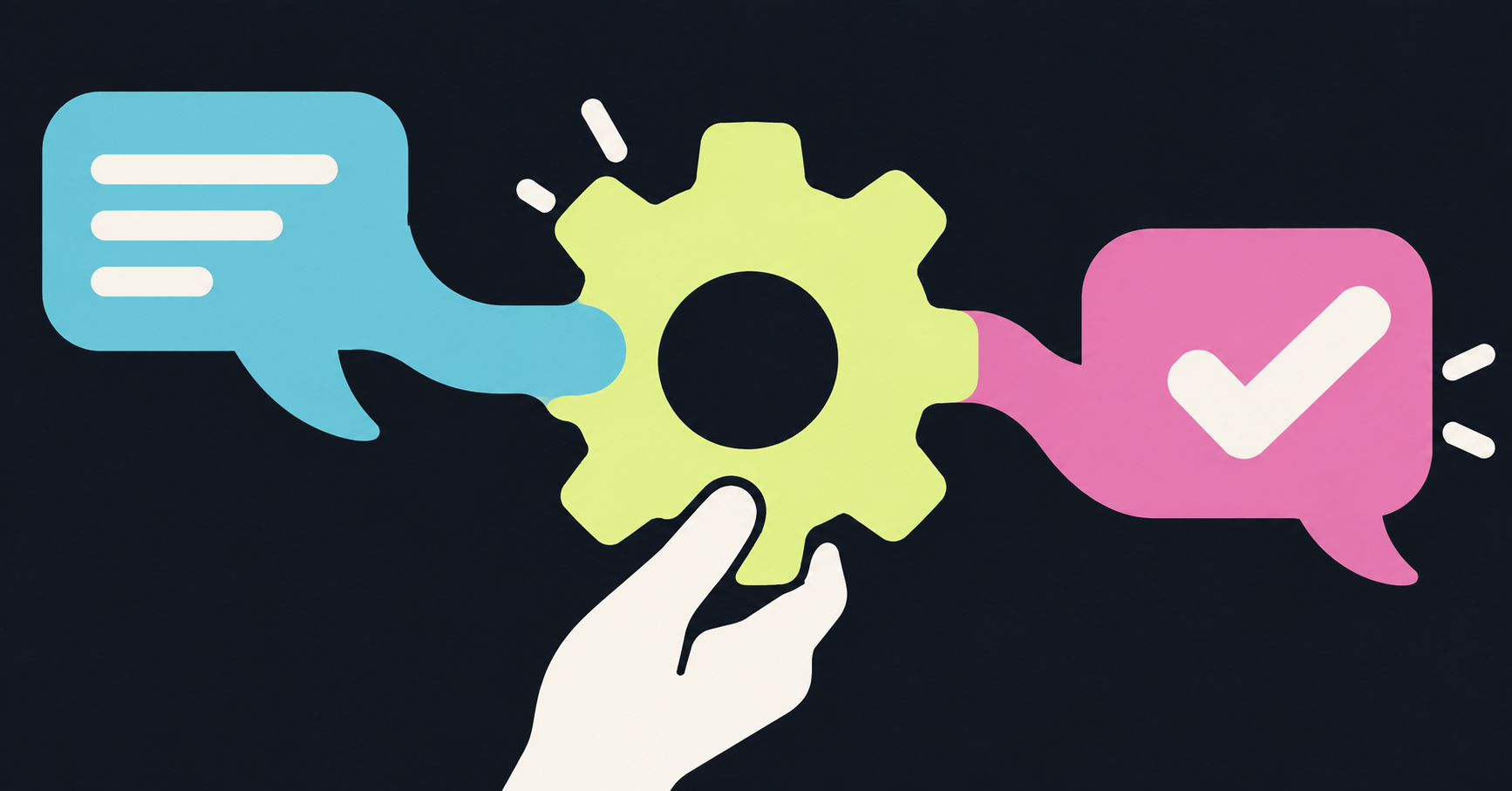


Customer service automation uses software to handle recurring questions and support tasks, such as checking orders, providing information and opening requests. It goes beyond a messaging interface by connecting company knowledge, business systems and rules for handing work to people. The aim is to give support teams more time for complex or sensitive requests.
Which tasks can be automated?
Order lookups, answers to common questions, request classification and updates in connected systems are common use cases. Customers may write through WhatsApp, Instagram, a website or email; completing the task depends on the available information and system connections.
Legal disputes, special discount approvals and sensitive complaints need clear escalation boundaries. A project should define not only what automation can do, but also when it must stop and involve an agent.
How does a customer request get resolved?
- A customer sends a message through a communication channel.
- The system identifies the need, such as an order question, complaint or information request.
- It retrieves information from company knowledge or a connected order, CRM or booking system.
- It prepares a reply and, where configured, creates a request or updates a record.
- Unresolved cases pass to the team with their conversation history.
For example, a customer asking about an order on Instagram can receive the current status from the store's records. Setup needs to cover order-system access and appropriate verification as well as the messaging connection.
What are the core components?
- Intent recognition: Identifies what the customer needs.
- Knowledge base: Supplies product, policy and process information.
- Integrations: Connect order, booking and customer records.
- Workflows: Define which actions a request can trigger.
- Agent handover: Routes cases requiring permission or judgment to people.
- Reporting: Tracks responses, resolution times and satisfaction.
When reviewing integration options, check access to the required records and actions, not just the name of a channel.
Rule-based, AI-powered and hybrid models
Rule-based automation follows defined steps and decision trees. AI-powered automation interprets questions written in natural language. A hybrid model combines open-ended questions with business rules: a reply can be flexible while the action stays within agreed limits.
Where is it used?
In e-commerce, common uses include product questions, order tracking and after-sales requests. Hotels use it for booking questions and guest requests. Corporate teams use it for multilingual answers based on company information.
Palmate's shared customer examples report a 40% improvement in support efficiency at Manuka. The Turkish Cargo example covers more than 50,000 questions from 196 countries, answered in 30 languages with a 4.25-star rating. These are results from those deployments, not a promise of identical results for every business.
How does automation work with live support?
Automation handles recurring work while agents deal with exceptions and requests requiring judgment. Human support depends on team capacity and working hours. Automation also has system dependencies, usage limits and operating costs; rising demand should not be assumed to be free.
Note: Speed alone is not success. Assess correct resolution, appropriate handover and the outcome the customer actually receives.
How should you choose a starting point?
Collect common questions and begin with one use case. Define the information source, permitted actions and escalation rules. Setup time depends on channels, integrations and testing, so one fixed timeline cannot fit every project.
Explore the Palmate AI chatbot approach and review pricing for your expected usage. Book a demo to assess your first automation.

Senior Software Developer
As a Software Developer at Palmate, Mustafa focuses on building scalable, high-performance products that turn complex AI capabilities into intuitive user experiences. He contributes to Palmate’s central AI platform, real-time embeddable chat widget, and web infrastructure. His background includes full-stack development for Canada-based DCBank.ca, covering digital identity verification, banking workflows, and card payment systems, as well as frontend development for Akinon’s marketplace platform. At Palmate, he applies this experience across React, TypeScript, Next.js, real-time web technologies, and LLM-driven product development.
Frequently Asked Questions
Answers to common questions on this topic.
Is customer service automation the same as a chatbot?
Which channels can it support?
How long does setup take?
Can small businesses use it?
Does it replace human agents?
How is pricing determined?